DQ Pest Control

Say Goodbye to Pests

Home

About Us

Pest Control

Locations

Animal Control

Detection Dog

Blog

Bee Removal

Contact Us


Call us toll-free at 1-888-92-Trapper

Pest Control


Cockroaches


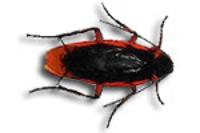
Cockroaches have been shown experimentally to transport a number of pathogenic bacteria and viruses on their legs and bodies. They have been found to carry the pathogens that cause tuberculosis, cholera, leprosy, dysentery, and typhoid, as well as over 40 other bacteria (like salmonella) or viruses that can cause disease. Thus, cockroaches, through their nocturnal feeding habits, represent a serious potential health problem. Their presence should be eliminated or diminished in dwellings and food establishments.

___________________________________________________________________________


Carpenter Ants


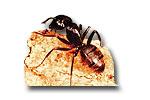
Carpenter ants build their nests in hollow trees or other cavities, including the walls of buildings. They usually take advantage of wood that is damaged by water and nest in it. These ants will remove water damaged wood, ejecting the dark particles of wood from the nest in piles outside. These piles resemble sawdust and are commonly seen near doors or windows near their nest.


Clothes Moths


Clothes moth larvae feed on wool, feathers, fur, hair, leather, lint, dust, paper, cotton, linen, silk, and synthetic fibers.  Moths are only destructive during the larvae stage.  Damaged fabrics have holes eaten through them by small, white larvae and usually have silken cases, lines of silken threads, and fecal pellets over the surface of the materials. 

__________________________________________________________________________


Termites


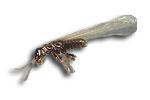
Termites mostly feed on dead plant material, generally in the form of wood, leaf litter, soil, or animal dung, and about 10% of the 4,000 odd species are economically significant as pests that can cause serious structural damage to buildings, crops or plantation forests. Termites live in colonies that, at maturity, number from several hundred to several million individuals.


Ticks


DQ Pest Control - Ticks
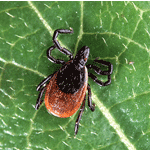
Ticks are blood-feeding parasites that are often found in tall grass and shrubs where they will wait to attach to a passing host.  Ticks can detect heat emitted or carbon dioxide respired from a nearby host.  Physical contact is the only method of transportation for ticks.  Ticks do not jump or fly, although they may drop from their perch and fall onto a host.
Ticks are vectors of human disease including the transmission of Lyme disease.


Fleas


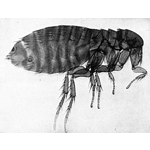
Fleas are external parasites, living by hematophagy off the blood of mammals and birds.  Their legs are long and well adapted for jumping.  Fleas attack a wide variety of warm-blooded vertebrates including dogs, cats, humans, chickens, rabbits, squirrels, rats and mice.  Fleas can be a vector for disease.  Fleas transmitted the bubonic plague between rodents and humans by carrying Yersinia pestis bacteria.  Murine typhus fever and tapeworms are also transmitted by fleas.
DQ Pest Control - Fleas


Mites


DQ Pest Control - Mites
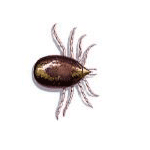
Mites are occasionally found in homes and attack humans in the absence of their normal hosts- birds, rodents, or insects.  Bites from these mites may be painful and cause severe skin irritation.  Bird mites are usually encountered in homes when they migrate from bird nests.  The bird nest may be located in the eaves, rafters, gutters, window air conditioner, stove or clothes dryer exhaust vent.  Rodent mites are primarily external parasites of rats and house mice, but they will also feed on humans.  Rodent mites can cause severe irritation and dermatitis in humans.  Areas bitten by mites may remain swollen for several days and leave red spots.  Scratching of bites often can result in secondary infection.


Hornets Nest


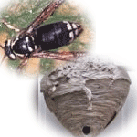
Bald-faced hornets are best known for their large football-shaped paper nest, which they build in the spring for raising their young.  These nests can sometimes reach 3 feet tall.  Bald-faced hornets are extremely protective of their nests and will sting repeatedly if disturbed.  The main area of the body that bald faced hornets attack on humans is the facial area.
DQ Pest Control - Hornets Nest


Yellow Jackets


DQ Pest Control - Yellow Jackets
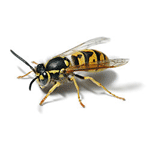
There are six species of yellow jackets native to New York State.  Yellow Jackets are shiny yellow and black wasps.  Fertilized queens start nests in the spring in ground depressions or cavities or sometimes in hollow logs on the ground.  A European species of yellow jacket, was introduced into the northeastern United States about forty years ago.  Unlike the native New York species, it prefers to build nests inside the walls of homes.


Carpenter Bee


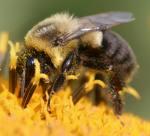
Carpenter bees get their name from their ability to drill into wood and nest in the hole.  Their drilling creates an almost perfect hole, about 1/2 inch in diameter.  This hole is usually located on the underside of the wood surface; including siding, soffits, decks, overhangs, fence posts and window frames.   Although the hole appears to be only an inch or two deep, it rarely ends there.   

  • The female carpenter bee will turn 90 degrees and bore a channel from six inches to as long as four feet.  This channel serves as a main corridor from which she will drill small chambers a few inches deep.  These chambers become egg holders.  She will deposit an egg, bring in a mass of pollen for the newly hatched larvae to feed on, and then seal it all off to ensure it's development before she repeats the process for the next egg.
  • The male spends most of his time flying around the nest playing guard.   Simply killing the male will not solve your problem.  The nest must be treated.   A single pair (male and female) occupies each nest.  It is not uncommon to find several pair of carpenter bees nesting in one structure.  They frequently nest near each other and often in the same area year after year, causing extensive damage.   You may find old holes near newer ones.  Sometimes the female will renovate an old nest gallery and reuse it.

DQ Pest Control - Carpenter Bee


Paper Wasp

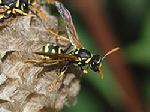
Paper wasp nests commonly occur around the home underneath soffits, eaves, decks, in  attics and sheds; wasps attack when the nest is disturbed and each can sting repeatedly; stings typically cause localized pain and swelling, but in sensitive individuals or when many stings occur systemic effects can occur including allergic reactions that may result in death. Since their territoriality can lead to attacks on people, and because their stings are quite painful and can produce a potentially fatal reaction in some individuals, nests in human-inhabited areas present an unacceptable hazard.


Norway Rat


DQ Pest Control - Norway Rat
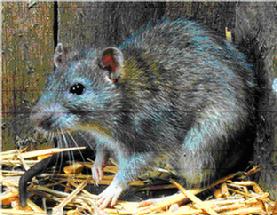
Norway rats have become inhabitants of New York.  They weigh up to one pound are 12-18" long.  They will nest both indoors and outdoors.  They dig burrows which are deep and long and have two or more entrances.   They can cause extensive damage to buildings and homes as they seek food and nest sites.  Their burrows may undermine foundations and slabs.  Their nests may block a vent causing an electrical hazard.  Rats chew on wires, causing electrical systems to short-circuit, or even start a fire.  They contaminate stored foods and can transmit murine typhus, leptospirosis, trichinosis, salmonellosis and rat bite fever to humans.  They are often infested with lice, fleas and mites that transmit other diseases.


Mice


Mice can damage buildings and households as they seek food and nest sites.  Their nests may block a vent causing a fire hazard.  They chew on electrical wires, which in addition to creating a fire hazard, could also short-circuit electrical systems causing failures of alarm systems or refrigeration.  They contaminate stored foods.  Mice are a disease risk and harbor parasites.
DQ Pest Control - Mice


Silverfish


DQ Pest Control - Silverfish
 Silverfish will feed on anything that contains starch or polysaccharides, such as dextrin in adhesives.  Favorite foods include glue, book bindings, paper, photographs, sugar, hair and dandruff.  Silverfish can cause significant damage to books, tapestries and textiles.  They may also feed on cotton, linen, silk and synthetic fibers.


Carpet Beetles


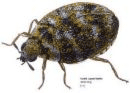
These Beetles can damage carpeting, clothing, furs, upholstered furniture and other articles containing animal products and natural fibers.  Carpet beetles can damage fabrics, furnishings and clothing that contain natural animal fibers such as wool, silk, hair, bristles, fur or feathers.  Synthetic items are resistant to attack, but mixtures of synthetic and natural fibers can be damaged.  The natural habitats of carpet beetles are the nests of birds, rodents, insects and spiders.  They can spread into homes to damage carpets, rugs, and clothing.  They also may feed on pollen and can be carried into the house on cut flowers.


DQ Pest Control - Carpet Beetles


Bed Bugs


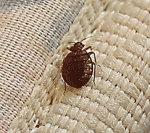
DQ Pest Control - Bed Bugs
Bed bugs are parasites that preferentially feed on humans. If people aren't available, they instead will feed on other warm-blooded animals, including birds, rodents, bats, and pets. Bed bugs are fast moving insects that are nocturnal blood-feeders. They feed mostly at night when their host is asleep. After using their sharp beak to pierce the skin of a host, they inject a salivary fluid containing an anticoagulant that helps them obtain blood. Nymphs may become engorged with blood within three minutes, whereas a full-grown bed bug usually feeds for ten to fifteen minutes. They then crawl away to a hiding place to digest the meal. When hungry, bed bugs again search for a host. Bed bugs are most frequently found in dwellings with a high rate of occupant turnover, such as hotels, motels, hostels, dormitories, shelters, apartment complexes, tenements, and prisons. Such infestations usually are not a reflection of poor hygiene or bad housekeeping.


Bumble Bee
Bumble bees are similar to honey bees, in that their colonies are headed by a queen, they collect nectar and store it as honey. However, bumble bees do not produce large amounts of honey, as honey bees do.  Bumble bees are important pollinators of many flowers and plants. Bumble bees are important in nature, because they are vital to the production of certain seed crops.  Bumble bees nest in the ground.  These bees may build their hive under your home, under your shed, or under your porch.  Although their activity in your gardens may be desirable, allowing them to nest in areas where children and pets frequent is not.  As beneficial as bumble bees are, they are indeed a pest when the location of their nest causes stings to people and pets. 
Call us for a free quote

Your Families Safety is our #1 Priority ---- Pet and child friendly practices.

Call us at 516-417-3472


Service Areas:

Long Island Nassau County Albertson Atlantic Beach
Baldwin Baldwin Harbor Barnum Island Baxter Estates
Bay Park Bayville Bellerose Bellerose Terrace
Bellmore Bethpage Brookville Carle Place
Cedarhurst Centre Island Cove Neck East Atlantic Beach
East Hills East Meadow East Norwich East Rockaway
East Williston Elmont Farmingdale Floral Park
Flower Hill Franklin Square Freeport Garden City
Garden City Park Garden City South Glen Cove Glen Head
Glenwood Landing Great Neck Great Neck Estates Great Neck Gardens
Great Neck Plaza Greenvale Harbor Hills Harbor Isle
Hempstead Herricks Hewlett Hewlett Bay Park
Hewlett Harbor Hewlett Neck Hicksville Inwood
Island Park Jericho Kensington Kings Point
Lake Success Lakeview Lattingtown Laurel Hollow
Lawrence Levittown Lido Beach Locust Valley
Long Beach Lynbrook Malverne Manhasset
Manhasset Hills Manorhaven Massapequa Massapequa Park
Matinecock Merrick Mill Neck Mineola
Munsey Park Muttontown New Cassel New Hyde Park
North Hills North Woodmere Oceanside Old Bethpage
Old Brookville Old Westbury Oyster Bay Oyster Bay Cove
Plainedge Plainview Plandome Plandome Heights
Plandome Manor Point Lookout Port Washington Rockville Centre
Roosevelt Roslyn Roslyn Estates Roslyn Harbor
Roslyn Heights Russell Gardens Saddle Rock Saddle Rock Estates
Salisbury Sands Point Sea Cliff Seaford
Searingtown South Hempstead Stewart Manor Syosset
Thomaston Uniondale University Gardens Upper Brookville
Valley Stream Wantagh West Hempstead Westbury
Wheatley Heights Williston Park Woodbury Woodmere
Woodsburgh Suffolk County Amity Harbor Babylon
Bay Shore Bellport Centerport Cold Spring Harbor
Copiague Deer Park Dix Hills East Hampton
Farmingville Hampton Bays Huntington Huntington Bay
Huntington Station Islip Kings Park Lindenhurst
Lloyd Harbor Melville Miller Place Northport
Oak Beach Oakdale New York City Kings County
Brooklyn Bay Ridge Bensonhurst Canarsie
Carroll Gardens Flatbush Park Slope Bronx
City Island Throgs Neck Queens Arverne
Astoria Bayside Belle Harbor Breezy Point
Broad Channel College Point Douglaston Forest Hills
Fresh Meadows Glen Oaks Glendale Howard Beach
Little Neck Long Island City Middle Village Oakland Gardens
Ozone Park Queens Village Rego Park Richmond Hill
Ridgewood Rockaway Park Springfield Gardens Whitestone
Manhattan Staten Island


DQ Pest Control is Nassau County Animal Control and Pest Control! Call us at 888-92-Trapper.