Call us toll-free at 1-888-92-Trapper
Animal Control & Nuisance Wildlife Removal
|
| Opossums are semi-arboreal omnivores, feeding on both meat and plants. They especially like fruits and grains, so they may raid gardens, chicken coops, bird feeders, pet food and garbage. Opossums have more teeth than any other land mammal. They have a partial or total immunity to the venom of rattlesnakes, cotton mouths, and other pit vipers. Opossums are marsupials (mammals with a pouch in which they carry their young), a primitive group of mammals found mostly in Australia. Kangaroos, koalas, and wombats are other well known marsupials. Opossums are the only marsupials in North America. They sometimes make their home in garages, under porches, sheds, or decks. It poses a disease risk to humans, because it can carry mange and rabies.
|
Timber Rattlesnake, Eastern Massasauga Rattlesnake, Northern Copperhead
|
There are seventeen species of snakes native to New York State, three of which are venomous. Snakes sometimes hibernate in buildings, especially the basements of old houses with stone foundations. They enter homes through torn screens, open basement windows, cracks in the foundation, or through gaps next to pipe and cable entrances. Snakes will follow their prey, which may include rodents, amphibians, and insects, into cellars, crawl spaces, attics, sheds and garages. Snakes may also be found in wood piles, under shrubs and under debris. A bite from one of the nonvenomous species of snakes, is rarely painful or results in any medical complications, with the exception of the Northern Water Snake, which is known for its nasty bite. If bitten by one of New York's venomous species of snakes, you should remain calm and get immediate medical attention.

| |
| Pigeon droppings deface and corrode buildings, homes, park benches, statutes and automobiles. Pigeon droppings can promote the growth of the airborne disease, histoplasmosis. Pigeons may also spread the diseases salmonellosis (food poisoning), cryptococcosis, pigeon ornithosis, encephalitis, an New Castle disease. Pigeons also harbor the parasites, mites, fleas and lice all of which will bite people.
|
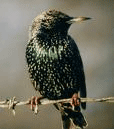
Starlings will nest in attics, vents, air condidioners, under the eaves, and in soffits and other openings in buildings. They can be very noisy and their droppings are corrosive. Their droppings can promote the growth of the fungus that causes the airborne disease, histoplasmosis. They also may harbor mites, fleas and lice.
| |
| Female bat colonies may roost in the attics of homes to raise their young. Their feces and urine can damage insulation and household goods and attract other pests. Bats are vectors for the diseases rabies and histoplasmosis.
|
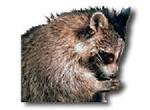
Raccoons usually live together in small, loose groups. Their original habitats are mixed or deciduous forests, but due to their adaptability, they are often found in urban areas where they can be considered pests. Rabies is so prevalent in some populations of wild raccoons that several states and the U.S. federal government, as well as authorities in Canada, have developed programs of oral vaccination to try to reduce the spread of this lethal disease.
| |
| Squirrels are generally clever and persistent animals. In residential
neighborhoods, they are notorious for eating out of bird feeders,
digging in planting pots and flower beds to pull out bulbs which they
chew on or to either bury or recover seeds and nuts and for inhabiting
sheltered areas including attics and basements. Squirrels are often
the cause of power outages. They will often chew on tree branches to
sharpen their teeth but cannot tell the difference between a tree
branch and a live power line.
|
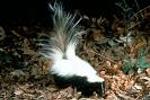
The striped skunk is a house cat-sized member of the weasel family. The skunk's best known feature is its ability to squirt an extremely potent and disagreeable secretion at potential attackers. The skunk lives in a variety of habitats but prefers open areas. Residential areas that have both lawns and large, mast producing shade trees often provide optimal habitat for skunks. Striped skunks mate in February and early March. Females give birth in May, often in woodchuck burrows, to an average litter of six. Skunks have been the most commonly confirmed rabies species, other than raccoons, during the spread of raccoon rabies throughout Southern New York.
| |
Free Estimates!!!
Your Families Safety is our #1 Priority ---- Pet and child friendly practices.
Call us at 516-417-3472
|
|